
FOSTERING INCLUSIVE POLICY DIALOGUE : LINKING GLOBAL AND LOCAL STRATEGIES
POLICY SUPPORTING PROGRAMMES -
FOSTERING INCLUSIVE POLICY DIALOGUE : LINKING GLOBAL AND LOCAL STRATEGIES
The PSP dialogue day was a dialogue event organised by ARES and VLIR-UOS designed to showcase the contributions of policy supporting programmes to the Belgian strategy for Global Public Goods. It served as a space for exchange between the academic world, decision-makers and field actors to inform reflections for the upcoming 2027–2032 funding cycle.
WHEN?
May 19, 2025, from 1:30 PM to 5:20 PM.
WHERE?
-
In-person: ARES, 180 Rue Royale, 1000, Bruxelles.
-
Online (only for the plenary dialogue) : connection details will be sent upon registration.
PROGRAMME
-
Arrival : 1:30 PM – welcoming and registration.
-
2:00 PM – 2:10 PM: introduction.
-
2:10 PM – 2:25 PM: flash presentations of activities of the policy supporting program.
-
2:25 PM – 3:40 PM: interactive workshops.
REFRACT PSP thematic session :
Aid Localisation, Civic Space & Fragility Analysis
This session addresses how to mobilise local expertise for fragility monitoring and Humanitarian-Development-Peace governance? This contribution explores how local expertise can be better integrated into fragility monitoring and the governance of the humanitarian-development-peace nexus. Drawing on the Sahel and Eastern DRC, it focuses on localised coordination approaches and on the ways local actors navigate increasingly restricted civic spaces while continuing to shape responses from the ground.
-
3:40 PM – 3:55 PM: coffee break.
-
3:55 PM – 5:10 PM: plenary dialogue : How does Belgian cooperation mobilise local expertise?
-
5:10 PM – 5:20 PM: closing remarks.

Événement REFRACT- « Les dynamiques d’escalade et de retenue de la violence dans l’est de la RDC » 27 february 2026
Événement REFRACT- « Les dynamiques d’escalade et de retenue de la violence dans l’est de la RDC » 27 february 2026
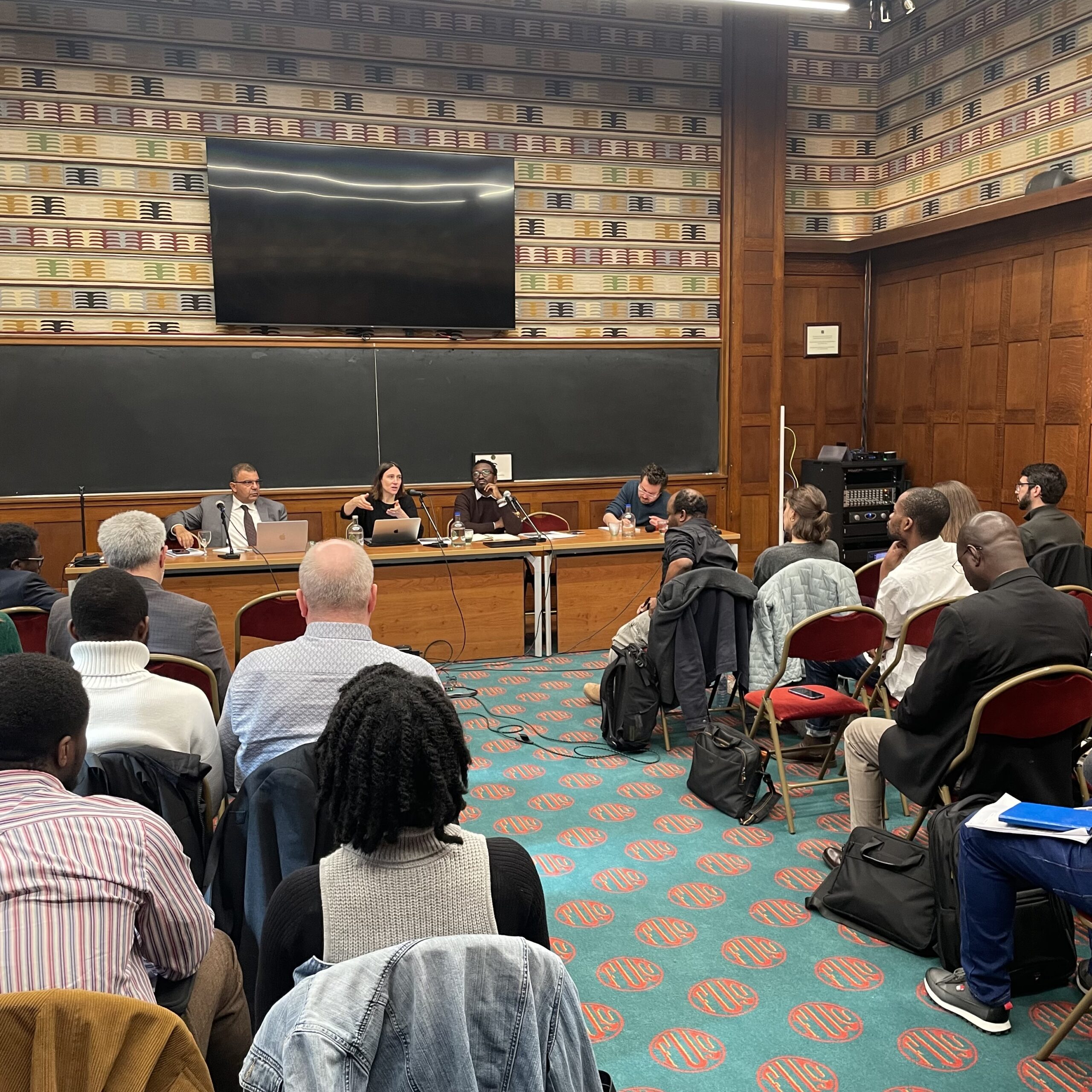


Le Programme d’appui à la politique ReFrACT (Résilience et Fragilité en Action), en collaboration avec Ebuteli (Institut congolais de recherche sur la politique, la gouvernance et la violence), a organisé un événement le 27 février, de 09h00 à 13h00, à la Fondation Universitaire.
Cette rencontre a réuni des chercheurs, des responsables politiques ainsi que des acteurs de la société civile engagés en République démocratique du Congo. Elle a permis de présenter les principales conclusions du rapport d’Ebuteli et de ReFrACT, intitulé « Les dynamiques d’escalade et de retenue de la violence dans l’est de la RDC », diffusé dans sa version anglaise, et de favoriser un dialogue entre les acteurs académiques, les administrations étatiques et multilatérales, et les professionnels de la consolidation de la paix. L’objectif était d’identifier de nouveaux leviers d’action dans les stratégies de réduction de la violence.
L’événement s’est déroulé en deux temps :
Premier panel : « Qu’est-ce qui rend certains conflits violents et d’autres non ? »
Ce panel a exploré les facteurs politiques, sociaux et institutionnels qui expliquent pourquoi certains conflits dégénèrent en violences armées tandis que d’autres restent contenus, et a présenté les principales conclusions du rapport.
Second panel : « Peut-on faire baisser durablement la violence sans résoudre les conflits ? »
Cette discussion s’est intéressée aux stratégies de réduction de la violence à court et moyen terme, aux limites des approches existantes et aux conditions dans lesquelles une baisse durable de la violence peut être envisagée en l’absence d’un règlement politique complet.
Cet échange visait à renforcer la compréhension collective des enjeux et à encourager une coopération plus cohérente entre les acteurs congolais et internationaux engagés en faveur de la paix, de la stabilité et du développement durable dans la région.

ReFrACT Café : « Défis sécuritaires en Afrique de l’Ouest : une approche systémique ? » 09 march 2026
ReFrACT Café : « Défis sécuritaires en Afrique de l’Ouest : une approche systémique ? » 09 march 2026


Le 9 mars, de 14h00 à 16h00 à Bruxelles, ReFrACT a organisé un nouveau ReFrACT Café consacré aux défis sécuritaires en Afrique de l’Ouest et à l’intérêt d’une approche systémique pour les analyser.
Face aux évolutions récentes des dynamiques conflictuelles dans la région, notamment leur extension progressive vers les pays côtiers, la crise sahélienne ne peut plus être appréhendée uniquement dans les limites de son espace d’origine. Elle s’inscrit désormais dans des recompositions sécuritaires régionales plus larges.
La discussion s’est articulée autour d’une question centrale : assiste-t-on à une simple extension géographique du conflit sahélien, ou plutôt à l’imbrication progressive de conflits distincts, porteurs de dynamiques propres mais désormais interconnectés ?
Les échanges ont mis en évidence la nécessité de repenser certains cadres analytiques afin de mieux comprendre ces transformations. Une approche élargie permet notamment d’analyser les recompositions régionales de la violence, des rapports de pouvoir et des dispositifs de sécurité.
Parmi les principaux enseignements de la discussion :
-
Une approche systémique permet d’appréhender les crises comme le produit d’interactions entre dynamiques initialement distinctes mais progressivement connectées.
-
La notion de « cascades de violence » éclaire la manière dont différentes séquences de violence se succèdent et s’alimentent mutuellement dans le temps.
-
Les mobilisations armées locales, notamment certains groupes de chasseurs traditionnels comme les Dozo, jouent un rôle important dans les dynamiques de sécurité locales.
-
Les trajectoires de conflit restent fortement contextuelles : les dynamiques observées au Mali ne peuvent pas être simplement transposées à d’autres contextes, comme le Bénin.
-
Les crises actuelles se caractérisent par une imbrication croissante entre dynamiques locales, nationales et internationales, dans un contexte marqué par l’internationalisation progressive des interventions et la diffusion régionale des violences.
Événement REFRACT- "Regards sur le Sahel: état des lieux et perspectives d'action pour la communauté internationale"
Événement REFRACT- "Regards sur le Sahel: état des lieux et perspectives d'action pour la communauté internationale" -16 December 2025


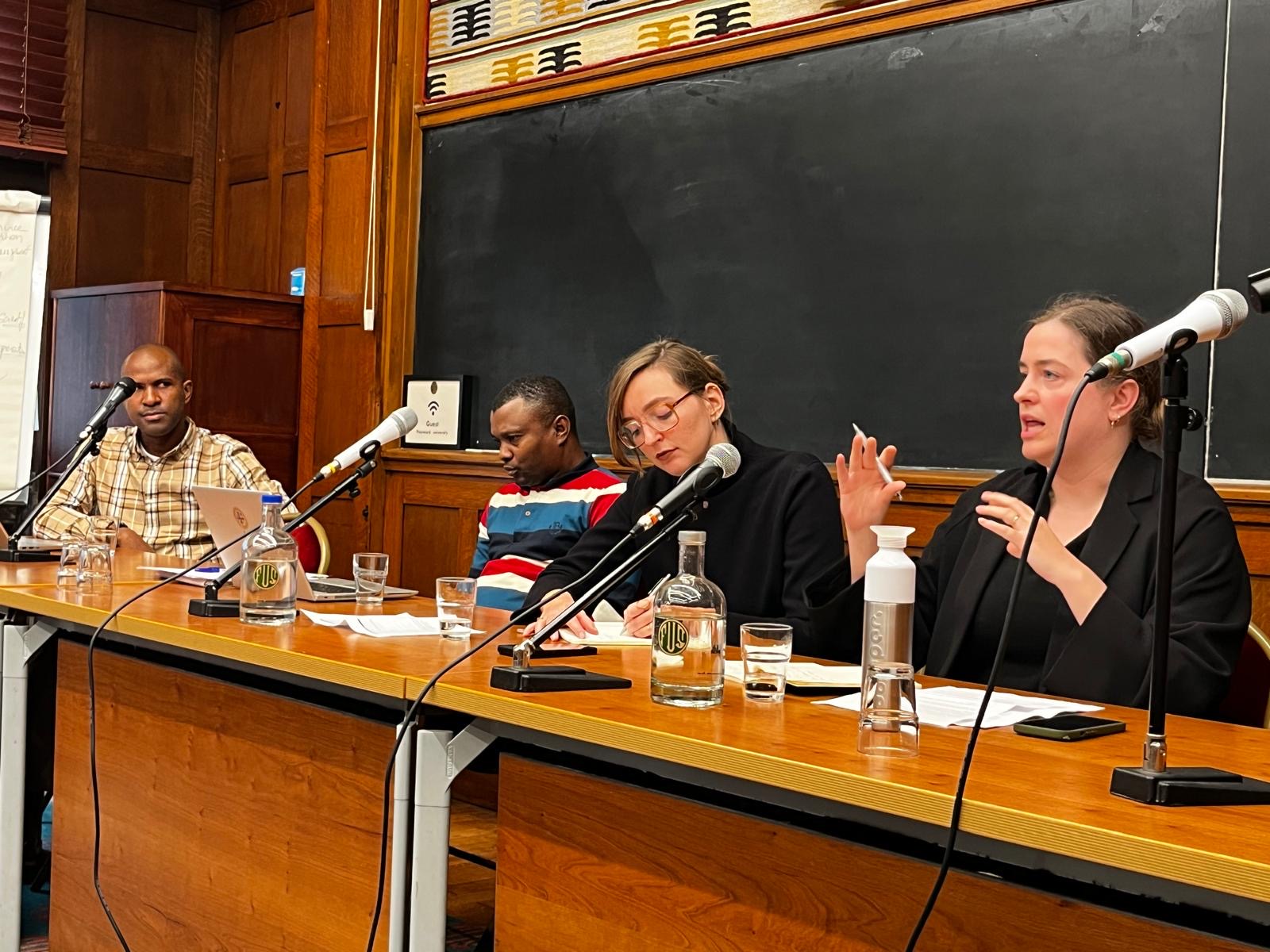


Cette rencontre a réuni avec succès des actrices et acteurs académiques, de l’administration publique, du monde politique et de la société civile engagés dans le Sahel. Elle a constitué un espace de dialogue riche et constructif entre les différents acteurs impliqués, permettant de mieux appréhender les dynamiques actuelles de paix et de sécurité dans la région et d’identifier des leviers d’action concrets pour la communauté internationale.
L’événement s’est articulé autour de deux temps forts :
Le premier panel, intitulé « Bilan de la situation actuelle au Sahel », a permis de dresser un état des lieux approfondi du contexte politique, sécuritaire et socio-économique de la région, à partir des analyses croisées de chercheurs et d’experts de terrain.
Le second panel, « Quelles sont les options d’engagement ? », a offert un cadre d’échange stimulant autour des différentes possibilités d’action, tout en mettant en lumière les principaux défis et obstacles rencontrés par les acteurs internationaux dans la mise en œuvre de leurs initiatives au Sahel.
Cet échange a renforcé la compréhension collective des enjeux et a contribué à encourager une coopération accrue ainsi qu’une action plus cohérente entre les acteurs sahéliens et internationaux engagés en faveur de la paix, de la stabilité et du développement durable dans la région.

REFRACT Cafe- « La police et sa réforme en RD Congo »- 22 October.
REFRACT Cafe- « La police et sa réforme en RD Congo »


Présentation du Café
La session a d’abord proposé, à travers l’intervention de Michel Thill, un aperçu de l’histoire de la réforme de la police en RDC. Elle a mis en lumière le quotidien des policiers réformés et leurs interactions avec la population, permettant ainsi de dégager des enseignements utiles aux réformateurs et d’esquisser des pistes de réflexion sur l’avenir de la réforme dans un contexte marqué par la guerre et l’occupation militaire.
En complément, Césaire Rasamoelina a abordé l’aspect pratique de la mise en œuvre d’un programme d’appui à la gouvernance et à la réforme de la police en RDC. Son intervention a porté sur les défis rencontrés, les approches développées et les leçons tirées depuis 2022, avec un focus particulier sur la mise en œuvre dans le contexte spécifique de l’État de siège en Ituri.

REFRACT Cafe- "Gender Backlash and Rising Authoritarianism in Fragile Contexts"- 08 October
REFRACT Cafe- "Gender Backlash and Rising Authoritarianism in Fragile Contexts" -08 October


REFRACT Cafe- “Civic Space and the Leaving No One Behind Principle’’- 23 September.
“Civic Space and the Leaving No One Behind Principle’’

How can civil society actors in fragile and increasingly repressive environments continue their work towards marginalised communities?
Civic space, defined broadly as the space for civil society actors to maneuver (Buyse, 2018), is being challenged globally. The situation is particularly challenging in fragile contexts, amid rising authoritarianism, shrinking freedoms, and increasing vulnerabilities.
Drawing from a combination of literature review and policy analysis, the study presented during this Refract Café offers fresh perspectives on the interplay between civic space and fragility, and how the Leave No One Behind (LNOB) principle can serve as a complementary lens to understand the adaptive power of civil society actors.
The presentation discussed five innovative strategies employed by civil society actors to maintain their agency in the face of shifting civic space. The authors also shared insights from case studies and testimonies on how these actors strive to incorporate and support the LNOB principle in their agendas during challenging times.
The session highlighted practical recommendations for donors and civil society organisations seeking to sustain meaningful engagement with local actors in fragile contexts.
Speakers:
Jan Van Ongevalle, Research manager at HIVA/KU Leuven
Alejandra Villanueva Ubillús, Senior researcher at HIVA/KU Leuven

REFRACT Cafe- Exchange with Dr. Bakary Sambe, Timbuktu Institute- 09 September.
Entretien avec Dr. Bakary Sambe, Timbuktu Institute


REFRACT Cafe- " Russian Information Operations in the Sahel: A Data-Driven Typology and Analysis" -13 May.
Russian Information Operations in the Sahel: A Data-Driven Typology and Analysis


In recent years, the Sahel region has become a focal point for various information operations, particularly those linked to Russia. As geopolitical tensions rise, it is crucial to investigate how these operations shape narratives and influence local dynamics.
This Cafe featured Professor Stéphane Baele from UCLouvain, who presented his paper titled “Russian Information Operations in the Sahel Region.” This research provided a comprehensive typology of the actors involved in these operations, grounded in a systematic analysis of the digital behaviors and content from over 250 Facebook pages based in Mali, Burkina Faso, and Niger that maintain connections with the Kremlin.
The discussion, chaired by ReFrACT co-lead researcher, Emmanuel Klimis, was complemented by insights from Melissa Lakrib who is currently researching the impact of Wagner’s deployment on the nature of civil war in Northern Mali.
This event aimed to shed light on the complexities of information warfare in the Sahel and discussed the implications for regional stability and international engagement.

Projection film 'Colombes sans Gravité' en avant-première et conférence-débat- 16 et 17 Mai
Projection film 'Colombes sans Gravité' en avant-première et conférence-débat


Comment le conflit au Mali consacre les soldats de la paix en acteurs impuissants de la guerre et pourquoi cet echec annonce un nouvel ordre mondial.
Il y a onze ans, le Conseil de sécurité de l’ONU, dans la continuité de l’intervention militaire française, décidait de l’installation d’une Mission de maintien de la paix au Mali, la MINUSMA. Les forces internationales devaient stabiliser le pays, aider à rétablir le fonctionnement démocratique et éliminer la menace djihadiste.Depuis, cette dernière ne s’est jamais autant étendue au Sahel, ce qu’il reste d’État au Mali s’en est remis à un groupe de mercenaires russes et la France, ancienne puissance coloniale, a été poussée dehors puis ensuite les Nations-Unies. Plongé au cœur des instances opérationnelles et décisionnelles de la mission des Nations-Unies au Mali et à New-York, éclairé par le témoignage d’acteurs directs, COLOMBES SANS GRAVITÉ voyage aux sources de l’échec pour questionner le modèle interventionniste international, les illusions perdues des solutions de paix et des processus politiques, à l’heure où la multiplication des conflits asymétriques à forts potentiels de contagion laisse craindre le retour de confrontations globales.
Ce documentaire a été présenté en première mondiale en novembre dernier à Columbia University, à l’invitation de Jean-Marie Guéhenno. Depuis, le film a été projeté lors de séances spéciales dans des cinémas.
Les séances au Cinéma Aventure de Bruxelles les vendredi 16 (19h) et samedi 17 (16h) mai 2024 ont été organisées à l’initiative du Centre de recherche en science politique (CReSPo) de l’UCLouvain Saint-Louis-Bruxelles, en collaboration avec le PSP REFRACT et l’APNU. La projection a été suivie d’une conférence-débat d’une heure, en présence du réalisateur et d’experts, et prolongée par un drink.
L’information a été diffusée à large échelle et le public a été nombreux à y assister.