
REFRACT
PUBLICATIONS
Bienvenue aux « Publications REFRACT », vous pouvez accéder aux travaux produits par notre projet dans le cadre de son rôle d’appui aux politiques. Les publications reflètent nos efforts de recherche et nos idées, visant à éclairer les décisions politiques et à favoriser une meilleure compréhension de la résilience et de la fragilité dans divers contextes.
Le Nexus HDP et les défis de l’action humanitaire dans la plaine de la Ruzizi au Sud-Kivu (RDC)
Ce ReFrACT Research Paper analyse la mise en œuvre de l’approche Nexus Humanitaire-Développement-Paix (HDP) dans la plaine de la Ruzizi, au Sud-Kivu en République Démocratique du Congo (RDC). L’étude retrace l’évolution des interventions humanitaires depuis les années 1990 jusqu’en 2024 et met l’accent sur une forme de sédentarisation des interventions humanitaires.

Brief ReFrACT n03 : « ReFrACT Café : Défis sécuritaires en Afrique de l’Ouest : vers une approche systémique? »
Ce brief propose une réflexion sur les défis sécuritaires en Afrique de l’Ouest et souligne l’intérêt d’une approche systémique pour analyser les dynamiques conflictuelles dans la région. Il met en lumière les évolutions récentes de la crise sahélienne, notamment son extension progressive vers les pays côtiers, et montre que celle-ci s’inscrit désormais dans des recompositions sécuritaires régionales plus larges. Le document s’articule autour d’une question centrale : assiste-t-on à une simple extension géographique du conflit sahélien, ou plutôt à l’imbrication progressive de conflits distincts, porteurs de dynamiques propres mais désormais interconnectés ?

Rapport [en anglais] : Escalation and Restraint in Conflicts in the Democratic Republic of the Congo
[Rapport en anglais] Since mass violence broke out in the Democratic Republic of the Congo thirty years ago, various theories have been put forward to explain the conflict and to find ways to stop it. Some have emphasized minerals; others have placed the onus on the weakness of Congolese state institutions or on meddling by its neighbors. This report serves as a summary of and intervention into this debate as conflict continues to escalate. We make two main points. First, we argue that more attention needs to be paid to restraint, focusing on places and moments when conflict has been ratcheted down, as well as on escalation. This leads us to our second point — that conflict cannot be explained by a single cause. Instead, escalation and restraint emerge from the interaction of political, economic, social, and historical factors. We argue that structural conditions — such as state weakness, unresolved land disputes, elite manipulation, and the legacy of past wars — shape how local triggers ignite into wider crises.
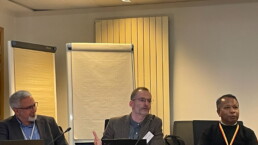
Brief ReFrACT n02 : « ReFrACT Café : La police et sa réforme en RD Congo »
Ce brief de deux pages propose un aperçu de l’histoire de la réforme de la police en République démocratique du Congo. Il met en lumière le quotidien des policiers réformés et leurs interactions avec la population, en tirant des enseignements clés pour les acteurs de la réforme et en esquissant des pistes de réflexion sur l’avenir de la réforme dans un contexte marqué par la guerre et l’occupation militaire.
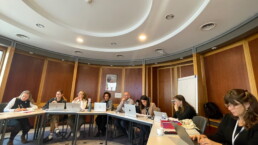
Le Brief ReFrACT n01 : « Café ReFrACT: Gender backlash and rising authoritarianism in fragile contexts »
[Brief in English] Ce brief de deux pages résume les points clés abordés lors du ReFrACT Café, « Gender Backlash and Rising Authoritarianism in Fragile Contexts », ainsi que les principales recommandations partagées au cours de la session. Il rassemble les idées collectives et constitue une référence pratique pour toute personne intéressée par ces sujets.

L’échec d’une tentative de « stabilisation » au Sahel
Depuis 2012, le Sahel est au cœur d’un conflit régional marqué par l’échec des interventions internationales et des pratiques de « stabilisation ». Largement inspirées par des imaginaires de reconstruction étatique et de lutte contre
le terrorisme, ces politiques ont finalement accompagné les dynamiques locales de violence et les polarisations politiques.

Civic Space and the Leaving No One Behind Principle
Dans cette vidéo, nous explorons le rôle crucial des acteurs de la société civile (ASC) dans le soutien au principe de Ne Laisser Personne de Côté (NLPC) dans des contextes fragiles et autoritaires.

Civic Space and the Leaving No One Behind Principle
Civil society actors (CSAs) are increasingly confronted with changes in civic space, particularly in contexts of high fragility and rising authoritarianism, where they are exposed to multiple risks and restrictive measures that limit their action capacity. This paper explores how CSAs respond to these changing dynamics and what strategies they employ to continue their critical work in fragile contexts.