
"The implementation of the Humanitarian-Development Peace Nexus in the DRC"


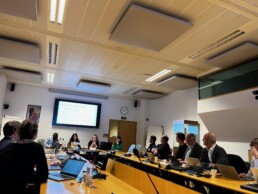
Description of the event :
As one of the most ambitious frameworks to date, the Triple Nexus seeks to bring together security, development, and humanitarian sectors to more effectively coordinate, finance, and respond to complex crises and conflict situations. According to the OECD (2019:6), the approach aims to “leverage the strengths of each sector… to reduce vulnerability, improve risk management, and tackle the underlying causes of conflict.” But what is needed for the successful implementation of the Triple-Nexus and integrated capacity-building across the spectrum of insecurity? How do we best leverage defense and security actors’ expertise in implementing the Triple-Nexus? This REFRACT Café explores these questions and the implementation of the Triple-Nexus in the DRC. Based on empirical examples and with a broad historical, geographical, and social perspective, Prof. Muzalia examines the evolution of humanitarian and development logics in the DRC: scattered humanitarian interventions, privileged zones and domains of intervention and the HDP nexus. He will then examine how this has transformed the affected areas and identify some of the challenges that must be overcome in order to improve interventions. Prof. Swedlund will discuss the results of a research project that studied the implementation of the Triple-Nexus across three Congolese provinces—Kasai, Kasai Central, and Tanganyika. The project’s core objectives are: (1) identifying the most promising practices for integrated capacity-building, and (2) comparing alternative approaches for integrating defense and security actors, including in partnership with UN missions.